Sunday, January 26, 2014

Individual Topical Review Outline - Social Media: The New Wave of Marketing & Advertisements

1. Executive Summary

2. Why I Chose This Topic?
Undeniably, social media is taking up a more significant portion of a person's life than before. Americans alone spend up to 23 hours a week online, this includes reading of emails, being involved on their social media plat forms as well as various communication platforms made available to us today (Mielach, 2013). Hence, with the increase in amount of time people spend online, it is naturally that businesses want to jump onto the band wagon and make use of social media to boost sales. Whether it is through increasing the awareness of a brand or product to simply maintaining a close and friendly clientele relationship with consumers, social media has got these businesses covered. It is hence of utmost interest to me to explore how the technology of social media can affect both businesses and consumers socially, economically and politically.

3. Background

  • What is social media marketing? 
  • Technology used in social mediate marketing
  • How did social media marketing come about

4. Historical Perspective
4.1 Time line of how marketing has evolved into today's social media marketing

4.2 Why is there a trend towards social media marketing? / What made previous marketing methods not as attractive anymore?

5. Current Situation
Types of social media marketing & the technology behind each:

5.1 Using a netizen's cookie information to strategically place advertisements related to his interest

5.2 'Share This' widget / 'Like and Share' methods

5.3 Online persona for businesses (eg. Facebook/Twitter pages rather than their official websites)

5.4 Engagement of celebrities/bloggers to endorse company's products/brand online
- Number of followers do matter (eg. A blogger with a six hundred thousand follower count will garner more sales than someone with only two thousand followers)
- Blogs: Sponsorship of a product/service and the recipient to blog a review/advertorial (can be in the form of a video)
- Instagram/Twitter: A picture/tweet that show cases the celebrity/blogger with the product/patronising the service

6. Future Consideration (To be completed upon further research)
6.1 Advantages of social media marketing:

6.1.1 Economic:
- New marketing strategies that are low in cost à More business opportunities since social media marketing is now available

6.1.2. Social:
- Opportunities for social media managing companies to emerge (eg. Nuffnang, Churp Churp, Gleam Digital)
- Universities preparing the undergraduates in this field of social media marketing (eg. National University of Singapore Faculty of Arts and Social Science module: Communication and New Media)

6.1.3. Political


6.2 Challenges/Obstacles that may emerge:

6.2.1 Economic
- The sunset industry of the print media

6.2.2 Social
- Privacy issues on tracking of cookies/Internet browsing history

6.2.3 Political

7. Conclusion

8. References

  • Mielach, David (2013). Americans Spend 23 Hours Per Week Online, Texting. Retrieved from http://www.businessnewsdaily.com/4718-weekly-online-social-media-time.html

Wednesday, January 22, 2014

Session 3: Technology & Industrial Development: Moving Toward Sustainable Development // Technology & Human Development

Brief overview/ Summary:

Session 3 began very interestingly as Prof started the class with a continued discussion from FaceBook on When Nations Die. After processing through the discussion between Prof and Benjamin, I do still agree that the mentality of a dying nation is an internal factor, which is the decision to allow the nation to "die" in either of the 3 aspects mentioned - cultural, moral and social. External events may have shaped circumstances to be what it is but it is ultimately the leaders/government of the country or even individuals to respond however way they want which would ultimately lead to these two consequences: the death or revival of the country.

Moving on here is an outline of what we've discussed in class:

  • A change in approach to industrial development: Linear VS Cyclical 
  • Moving away from the use of machines for industrial development to a greener use of these existing machines or new environmentally friendly machines. Just to touch on this a little, I feel that instead of viewing this as a negative consequence of our un-green activities, we should see it as an opportunity where innovation and technology can work together to come up with something brand new to help salvage our environment :)
  • Discussion on Pacific Garbage Patch: It is really upsetting to see how as humans we not only destroy the planet for our future generations but we also are not able to live harmoniously with other species, in this example the marine life. Our thrown away plastics are in fact causing so much harm to the marine life. They are the ones paying for what we take for free when we check out our groceries at the super market :( 
  • Externalities: Taking into account "other" aspects of producing a product aka Environmental Accounting
  • A survey did in class to show how much more people are willing to spend on green products
  • Michelle's presentation on Are Tablets Really More Environmentally Friendly?
  • Edison's presentation on Cloud Computing
  • The Shahi Landscape Model for Technology Assessment: Conceptual Framework
  • RDA
  • Shahi Technology Innovation Value Creation Pipeline
  • The key elements for successful innovation
  • Adrain's presentation on Space X
  • Tarun's presentation on Google

Interesting Observations/ Key Takeaways:


  • I never really went into detail about how we are using up resources in a linear instead of a cyclical way and how this actually impacts us and our environment. This cyclical approach reminds me of the 3 Rs that we were taught back in primary school namely reuse, recycle and reduce. What struck me the most was the symbol for the 3Rs actually forms a cycle and how with these 3Rs we are able to therefore move away from a linear approach to a more cyclical one. Interesting fact of the day for me!
  • We also talked about the IPP Toolbox which is featured in one of our readings the few ways that the EU are using to promote a greener environment. Under consumer information, labelling is placed under the category and we moved on to do a survey on how much are consumers willing to pay for a greener product. Before Prof posed this question to class, I had already taken note to do a research on this because I myself would not be very much willing to pay a lot more for something that is of the same specifications, except that it is greener. I think this is applicable for all as as consumers, we do not really feel that detrimental effects of our decisions when we choose to buy something less environmentally friendly products as compared to something more green, therefore it does not translate into the dollars we are willing to part with. Prof brought up the example of how this 'labelling' method is used in The Body Shop. 
http://www.thebodyshop.com.sg/en/about_us.aspx
  • It is definitely excellent that The Body Shop is one of the pioneers in leading the green revolution, by not compromising on the quality of their products and future resources for the present generation's usage. As I was mulling over this, I thought of another brand that I myself love and so happen to have this paper bag from my last purchase with them.


  • Lush, like The Body Shop, is also founded in the UK and prides itself in the au-natural vision of the company. Products used under Lush is fresh and contains little or no preservatives with minimal packaging used - a black bottle/container with a simple fuss-free label. There is no marketing for Lush in the form of paper, which means no newsletters sent to consumer's mail that they will eventually chuck into the garbage bin, flyers, etc. Lush also has a recycling programme that encourage consumers to bring back the 5 Lush pots and receive a free fresh mask! I do love Lush a lot and makes me excited to be apart of the vision Lush has. However, when I think about it, it wasn't all the environmental campaigns that Lush (or The Body Shop) that made me want to purchase their products. If their products were not environmentally friendly, I would still pruchase them because I like it. The environmental factor is just a bonus to me. A food for thought on this issue would be how to change the mindsets of consumers like me to really purchase an item due to its greenness and not make this factor a sideline. This also means that such green products are price elastic, which means that as long as price increases the demand for it falls. As a business entity, this definitely doesn't sound very enticing to me. Therefore another question to ponder is how to make green products more price inelastic to ensure that consumers do not stop purchasing them even with increasing price tags.
  • This thus ties in with the video that we watched, titled How Stuff Works and how mankind are now being known as consumers instead of 'fathers/mothers', 'teacher', 'police men', etc. This definitely is true as I have read another article that explains how people now justify their frenzy gift purchasing with the season. Be it Valentines' Day which is upcoming, Christmas/Black Friday Sales which was just over, birthdays, Thanksgiving, etc, there is always a reason to gift gifts and is probably an impact as explained by the video - President Bush encouraging spending as part of economic growth through the fiscal policy. 

  • The first video also talked about how developed countries such as the USA are pushing the responsibility of saving the environment to emerging economies such as the BRICS. Here is a funny video illustrating that in the Kyoto Protocol situation.

  • Out of the two presentations for session 3A, I feel that Michelle's presentation was really thought provoking and did sparked a few opposing viewpoints in our discussion. Personally as much as I do love reading, the clutter books/magazines/etc create can really be a hassle, not to mention the amount of paper it requires to print on. On the other hand, a tablet might remove these problems but then again it requires rare minerals to produce which is not ideal for the environment and on top of that we would still have to charge it which increases our energy consumption. To my surprise, TWC is one of the very few modules I take that highly encourage us to make use of our laptops and do our work online. There are many others like Analytical Skills, Academic Writing, Political Science that strictly impose a ban on the use of laptops and mobile devices during class for note taking and even our examinations are done on hard copy. To this I say, each his own. Prof might see it from an environmental point of view that using soft copy materials will help save our planet but to these other profs it might be because of other issues such as laptops being more of a distraction etc.

  • The RDA translation process was another good take away for me that lesson, especially from Prof Arai's perspective. This is also true in terms of academics or in the working world. A dream will only remain a dream unless one goes through the hard work and toiling (aka nightmare that most people are not willing to do) to make it a reality! :)

  • Last but not least, Tarun's Google presentation was also really insightful where he pointed out that Google fosters innovation. I have done a research on Apple in the previous sem and therefore am able to compare these two companies. While Google does seem to have a 'wow' factor in creating a creative environment for Googlers such as the 20% Time (allowing Googlers to use 20% of their time at work to do something they enjoy as a source of inspiration) and the 8 Pillars of Innovation (). Tarun also posted a discussion question in class which asks if the Google culture should be extended to other companies. I gave my response in class which I shall note here:
"I do not think the Google culture should be extended to other companies especially one that is of a different culture as Google or America in general. Of course, other companies can adopt some of their policies and change it to suit their own needs better but companies such as Samsung which is a chaebol are also considered a success as a technology company. There is no one path to success."

  • Even though many want to work with Google as shown by the significant number of hands raised when this question is posed, there are a lot of other factors to consider as to if Google's policies can be adopted to other companies especially those that are not in the technology sector such as an individual's personality (whether he is a more structured or open ended/creative person) 

Personal Rating:

Overall, 9/10 as I throughly enjoy TWC lessons and look forward to more :)

Wednesday, January 15, 2014

Session 2: Technology, Society and Global Dominance // Technology and Human Development

Brief Overview/Summary:


Session 2 began with Prof clarifying the class' general perspective of the TWC class: that is we are not analysing the nitty gritty details on how a particular technology works but rather how this technology will affect our lives and therefore how are we going to cope with this change. I think it is extremely important to get this right from the start as it will help us better absorb our content and also enable us to be adequately prepared for class having this big picture in mind. 

Some of the highlights that I have picked out during the lesson: 
  • With regards to the clarification made above by Prof, he brought up an example and that is Google glasses. What is important in the invention and availability of such a technology is how it will affect future privacy issues, the way we will socialise and obtain our information from rather than the specifications of the Google glasses. I think this puts everything into context. 
  • How societies have evolved from hunting and gathering to agriculture to civilization and finally industrialization 
  • Big Bang Theory by Barenaked Ladies "It all started with a big bang!"
  • What does it mean to have "global dominance"?
  • Reactions to colonialism 
  • Two wonderful presentations on global dominance by classmates Joy and Adeline on the mobile phone industry and McDonald's respectively
  • Progressiveness in human development (video 1 of session 2B), the Millennium Development Goals (video 2 of session 2B), GNH (video 3 of session 2B)
  • Another two fantastic presentation that had a lot of oppsing views by Amol and Alson on genetic screening and the future of mankind


Interesting Observations & Ideas/ Key Take away points:


  • The Shahi Organizational Behaviour Model for Identifying Innovation Leaders and Dominant Players was one of the most interesting and greatest take away for me in this session. I had the chance to view the slides prior our lesson on Monday and it looked like any model, and may I also add a "common sense" one, that I had seen before whether it was during my time doing Leadership and Team Building (LTB) or during motivational talks outside I had attended. What was so "common sense" to me before totally changed when Prof explained this model on the characteristics on how companies get their prestige and how others fall from their top spot. This tipping point of it all was their attitude towards change and adaptability. It was a very intriguing model that I spent some time outside of class reflecting my own attitude in life as well because I may be a person who is uncomfortable with change and new environments but I realise it is during these trialling times that allowed me to thrive and become a person I never thought I could be. I would definitely want to continue to be a "rising star" for as long as possible. I feel that Joy's presentation on the global dominance in the mobile phone industry, zooming into the case study of Nokia ties this concept in very nicely as we could see for ourselves how the fall of Nokia was due to many of the concepts Prof shared in this model
  • Yet on the other hand, even stars do die over time and I am curious if this is a part and parcel of life. What comes up must go down so that new players in the market or new leaders in an organisation have a chance to take the hot seat. If a company were to always be on top as a dominant player in the industry, would they then monopolise the industry? Similarly, can a person stay on top as a dominant player forever? Something else for me to think about as well

  • Another interesting observation was the reaction the class had on colonialism. I agree with Prof as to the colonial master actually did more harm than good for their colonies in general whereas I seem to gather that the class' feel that colonialism did more good than harm! I had the privilege of studying the history of Southeast Asia in JC and I could see the effects that was left my colonialism even up to today. An example on this would be Myanmar's unstable political scene after the assassination of Aung San therefore leaving the country in chaos after the umpteen rejection by the British to grant then Burma its independence first from India then from the British. Indeed, the colonies were merely seen as a place whereby their masters could extract resources for their own benefits as seen from the light hearted song "British Things" in the video of the History of Great Britain shown in class. 
  • To me, this shows how one issue always has two opposing views and it is important to be aware of these before taking a stand or making a decision. This brings back to the point on technology where we have to be able to accurately discern what a particular technology can do for us and put it to our advantage but also know of the negative consequences it might bring hence minimizing them to the lowest.  

  • In the second portion of the session, we now focused on technology and human development, we were shown three videos mentioned in the summary of the class above. I enjoyed watching all three videos as I am more interested in this aspect of technology. 
  • Video 1 showcased Han Rosling explaining to us in the aspect of time, how countries grew in their wealth and health. I found Rosling's presentation style very interesting as it involved both visual and auditory aids that allowed me to see the situation clearly. It was very evident how the countries that rose up to the top of the graph were mainly colonial masters whereas those that were left behind were mainly colonies. It was also very evident how after WWII, used-to-be colonies that now had the mandate to rule were prospering much quicker and this ties in with the reading on colonialism and how it is true that the colonies were better off without their colonial masters. Something that made me ponder was is there ever a time where everyone achieved equality and all the countries are able to reach the highest point in the wealth and health graph? Would that be achieved under the capitalist system?    
  • Video 2 therefore talked about the MDG that UN hopes to achieve by the year 2015 which is only one year from now. My first thought upon viewing this video was a sense of doubt as some of the goals stated were really quite ambitious. I therefore looked up on the current status of the MDG goals (as of 2013) and find it heartening that while some goals such as environmental sustainability, maternal deaths and education for the young still need a lot more work, there are other areas that have significantly improved. This thus show that under the capitalist system, disparity between the rich and the poor can still be reduced. However, are people willing to sacrifice a portion of their own growth in terms of their resources, time, etc to help others grow as well? 
  • Video 3 on Bhutan's GNH was also very inspiring and reminded me to achieve balance in my life as well. A short summary of the video: How the Forth Dragon King balanced economic development of Bhutan with the emotional and spiritual wellbeing of the people. This was one of the topics I shared with my mom as I pre-warned her on my probable absence during the upcoming Chinese New Year celebrations as that week being week 4/5 of school and also the time when submission deadlines start drawing nearer. She told me that while it is important to do my best for my studies, family gatherings should not be made a sacrifice. Chinese New Year being one of the more important, if not most important, festivals where family members are able to gathering together to catch up and maintain relationships with one another after a long year of striving. I will therefore have to put myself in the Forth Dragon King of Bhutan's shoes these upcoming few weeks and try my best to achieve work-life balance just as how the Forth Dragon king managed to balance economic growth with GNH so that I do not sacrifice the important family time during the CNY break *zen mode*

  • Both Amol and Alson's presentations were very fresh to me as I rarely explore these aspects on technology. While Amol's presentation created many controversy responses during class, I think it is ultimately up to an individual to decide for their child whether they want to go ahead and proceed on with genetic modification. A question that I wanted to ask was if in the most ideal situation where everyone, rich or poor, is able to genetically modify their child would the selected traits be the same from each other? Would there be a trend difference in the kinds of traits parents choose for their child? If not, then wouldn't everyone be like robots, possessing the same kinds of strength, intelligence, beauty, personality, etc? How will this then affect the world if we lived in such a place?
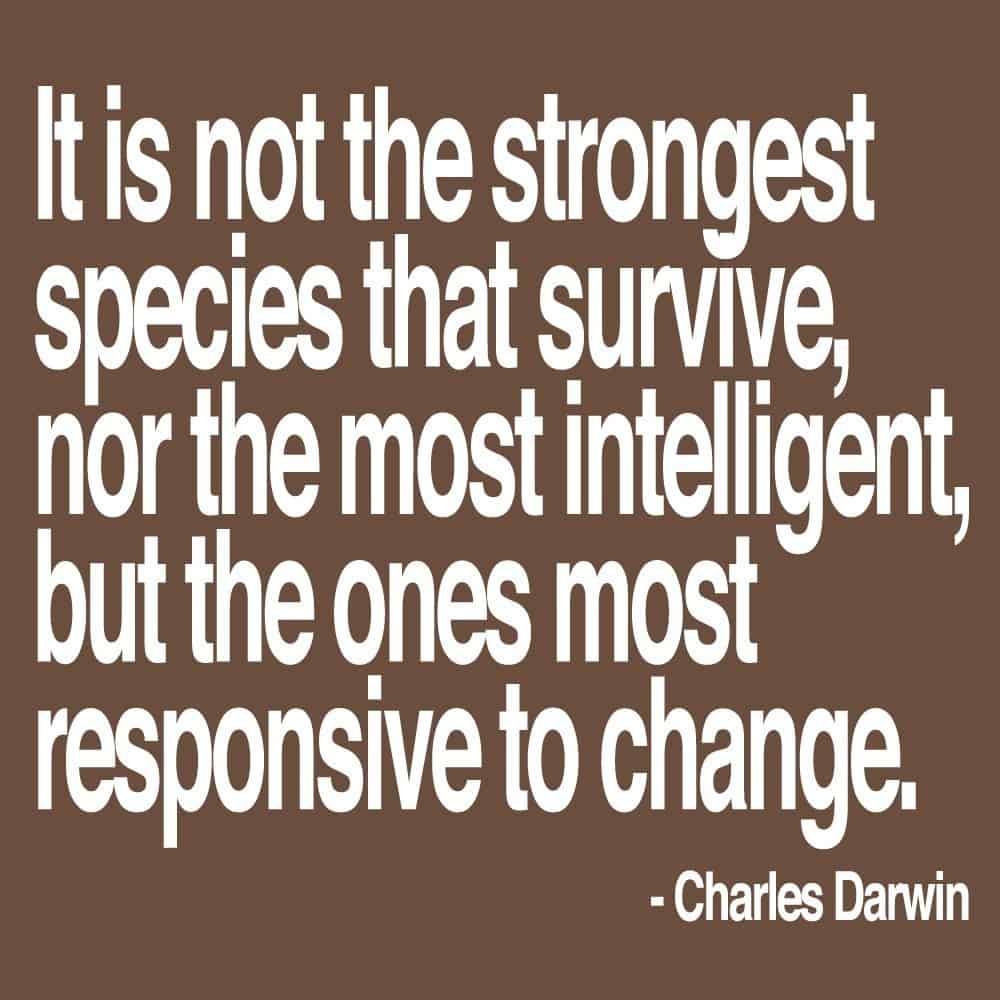
  • Another take away to me was when Prof mentioned a quote by Darwin and the kinds of response after this quote was mentioned. I think this greatly reflects the kind society we are living in today where people are willing to go to all sorts of length to change themselves to suit the environment (eg. the ideal standard is to achieve straight A+ in school and obtain a perfect score of 4.3 GPA therefore I will do anything - change my genes to become "smarter" etc to achieve it) instead of seeing how unique everyone is and playing on our strengths (becoming adaptable and responsive to change). I admit it is hard to see how "good" I am when society has already defined what is good and sometimes even after trying our best, it is still not enough. I think it is high time we reflect on our own definition of success and why do we have the tendency to follow society's definition of success. Although this is not technology or the main gist of Alson's presentation, I still feel strongly on voicing my opinion after Prof mentioned this quote. 


Personal Rating for the Session:

I would give this session a 8/10 as I thoroughly enjoyed the wide spectrum of things we have discussed and am looking forward to next week's session. I love seeing not only how technology is being discussed in context but also how we can use it to apply to other aspects of life. Thanks Prof & G17 for a wonderful session!

Wednesday, January 8, 2014

Session 1: Technology and the Rise of Civilizations

Brief overview/summary:
My first ever Technology and World Change session and of course I had to do my own research on the whole idea of this course and the professor so as to give me a heads up. Many have told me that being in Prof Gurider's class = relatively much more work than other TWC classes' and honestly it did give me quite a scare.

Today's session was a good way to start the ball rolling for TWC as it gives us the background on how technology itself has evolved over time as well as how it has helped mankind evolve - through the rise of civilisations. We also managed to watch episode one of Guns, Germs and Steel (GGS for short) and it is very insightful to me how Diamond uses these three specific aspects in understanding how technology has impacted the world. I have never seen technology or the world in these aspects as technology to me mostly consists of the electronic aspects of my life, i.e. my phone/laptop, television, washing machine and one I take for granted the most, the light bulb. 

Interesting Observations and Ideas
  • In the GGS video that we watched during class, one of more interesting observation I gleaned was the question Yali posted to Diamond. "Why do you white people have so much cargo whereas we (the people of New Guinea) have so little?" and Prof explained that it was due to the difference in advancement of technology in America as compared to New Guinea that led to the stark contrast in cargo. It seemed like technology was the sole reason for this difference. This made me think about the other possible factors that may have contributed to the difference. Does not culture, which then translates to the different needs each culture has or the environment (i.e. the availability of natural resource to "create something" or the nurturing environment that allows for technology to be invented) play a role in the difference in advancement of technology for any two countries as well?
  • I also ask myself if the reason for advancement in technology was due to demand or supply? For countries that were able to begin civilization, was there a lack in their pre-civilisation period which caused them to move forward technologically and on the flip side the New Guineans did not feel there was anything lacking or missing which hence made them feel comfortable with their lives and halted advancement in technology (indicating demand, or lack of). Or was it the idea that technology was able to help them progress that allowed these people to continually work towards advancing their current state of technology (indicating supply)?
  • Something interesting that Prof mentioned that might be unrelated to "technology". He mentioned that a lot of materials are very euro centric and that is due to the fact that they were the ones that write world history and we are looking at history from their perspective. An interesting fact on this issue is that during the Cold War of 1945 to 1997 , the world history was written as what the British and Americans thought it was from their point of view. However, when the USSR collapsed and they began to embrace the idea of openness, world history was completely re-written as the Russians now showcase their side of the story and many assumptions that the British/Americans assumed of the Russians were wrong.
Key Takeaway Points
  • Is technology the sole reason for modern civilization? This question still bugs me as having taken sociology in term one, I know for one that there are many reasons why societies are what it is now and my quest during this course of time in TWC is to find out if the presence technology is the root issue of inequality in the world. 
  • Another video that we saw in class was Shift Happens and I later went on to search for the updated statistics. (Did You Know? Facebook would be the THIRD LARGEST country in the world if it is one!) It is really fascinating how rapid technology is and even nowadays, we incorporate technology into school (like writing on this blog for instance) and how technology is able to facilitate so many other aspects of our lives (conducting real time video conferencing even if there is a twelve hour time difference and even finding your soul mate online even if they are separated by oceans.) Technology will be invading (for a lack of better word) more portions of our lives and it is here to stay. It is important for us to understand how it has come about and how will it continue to evolve in order for us to benefit from the marvellous discoveries technology will bring to mankind. Therefore, I feel that TWC, especially under Prof's guidance will be a fruitful one :) Here is an interesting link that I found while reading up more on technology which I found was really fascinating! 

Issues for Further Discussion 
  • I feel that in relation to the rise of civilization, we could have used one specific country as a case study and understand it in more depth how technology has helped or did not help them in modernising. As these ideas are very abstract, being the first lesson of TWC, I felt that it would be good to have a more concrete evidence as to how technology really did help in the rise of civilization.  
  • In the beginning of the lesson, we had a round of ice breakers and many indicated that they did not know anything about technology and world change. I felt that Prof could have engaged us through maybe a simple video that covered all the different aspects of technology that will be covered in the course and from there maybe we would have a better idea on what TWC so that we are able to have a heads up on the true essence of this course.

Personal Ratings for Session 
I would give it a 6/10 so that there will be more room for a higher score in the next lesson! :)

--

To sum up, I found this interesting picture on Google on how technology has changed so fast that in the 1990s we have so many (look at how bulky each of them are!) gadgets, each for different purpose. In a short span of ten years, all these have been replaced by a single gadget! Definitely relatable to me :)